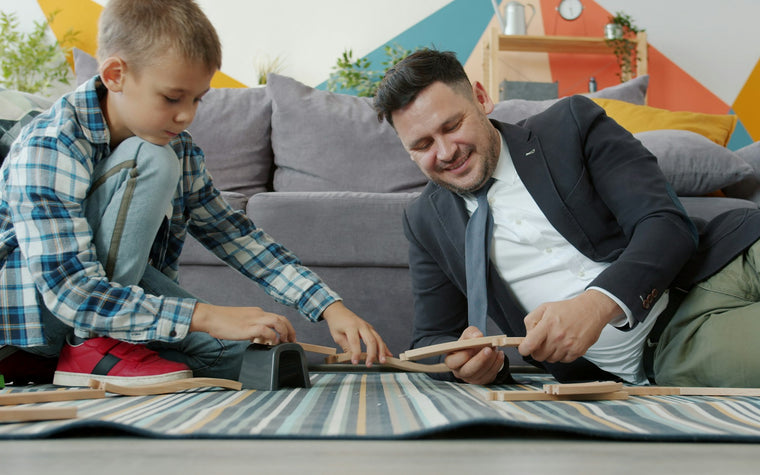
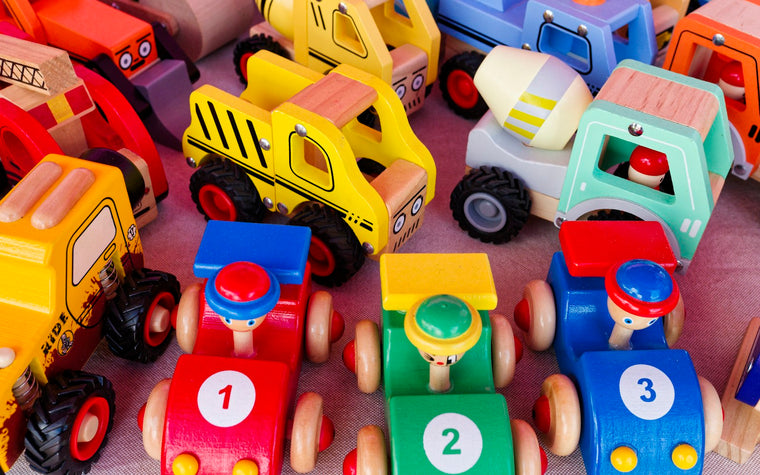
Fine motor skills are the ability to precisely control the small movements of the fingers and hands. They’re needed to button a jacket, hold a spoon, draw and, later on, write. The good news: you can develop them through simple play.
1. Block towers
Placing one block precisely on top of another takes concentration and a steady hand. The taller the tower, the greater the challenge.
2. Bead threading
Large wooden beads on a string are a great way to practise finger coordination. Start with large beads and a thick string.
3. Shape sorters
Turning a shape so it fits through an opening develops both finger dexterity and spatial thinking.
4. Peg puzzles
For little ones, peg puzzles with wooden knobs to grasp between three fingers. That’s the very same grip they’ll need for a pencil later on.
5. Fasteners and knots
Fine motor skill boards with buttons, zippers, buckles and laces let children practise everyday skills through play.
6. Play dough and dough
Rolling, squeezing, stretching—playing with dough strengthens the hand muscles.
7. Scooping and pouring
Scooping rice from one little bowl into another with a spoon or transferring pom-poms with tongs—simple, but very effective.
8. Toy tools
Screwing, tightening nuts, “hammering”—workbench sets build both strength and precision.
Tip: Don’t rush your child or do things for them. If a task is too difficult, offer an easier option. The joy of accomplishing something is the best motivation.